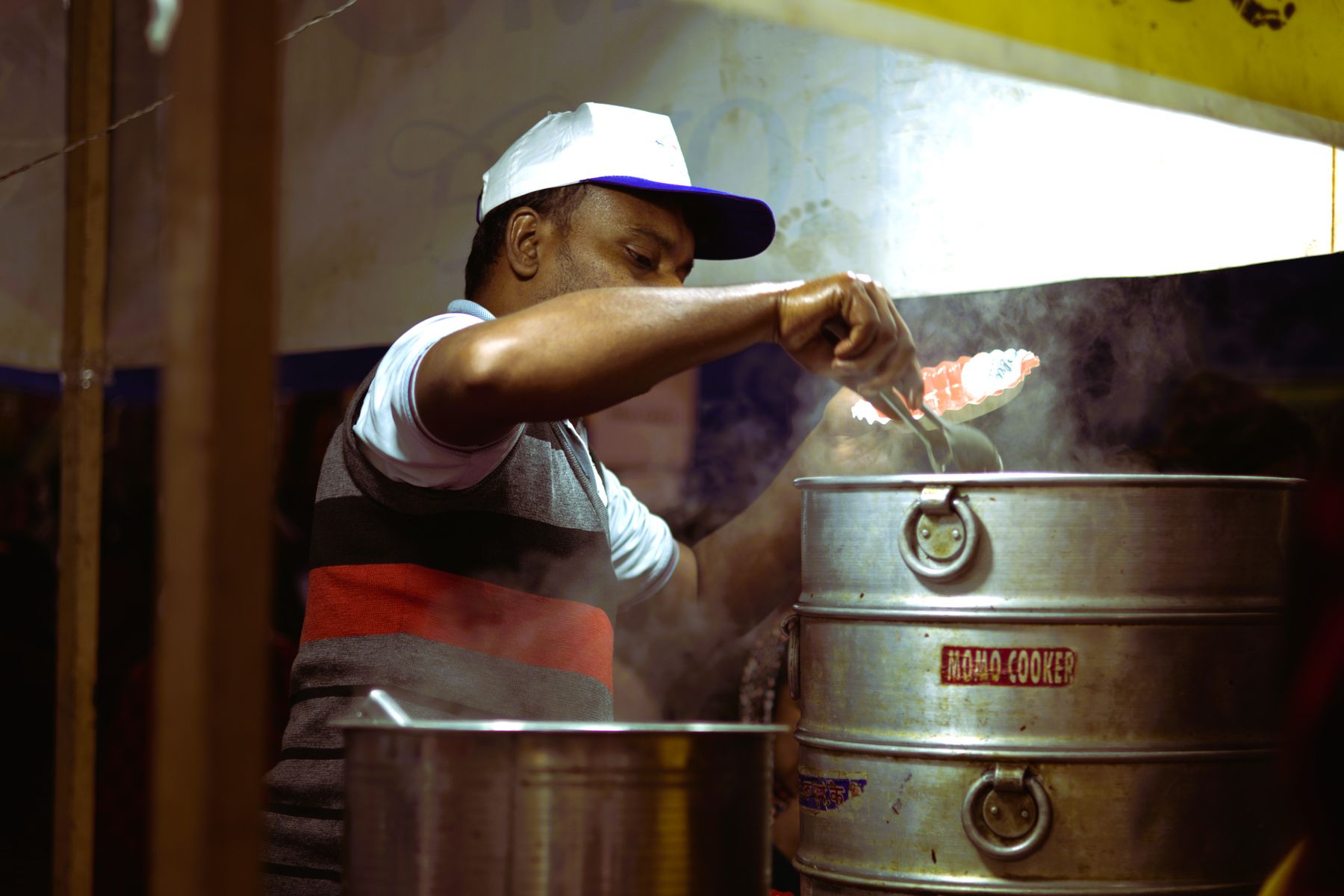
Suya and grilled things: evening is the hour
Suya is the anchor of any Lekki street-food evening. You'll find the best clusters around Ikate Elegushi and the Admiralty Way junction, where mai suya set up charcoal grills from about 6pm and keep going until the meat runs out, often past 10pm. Beef skewers are the standard, but ask for ram or chicken if you want something lighter. Expect a paper wrap with raw onion, tomato and a dusting of yaji spice. The going rate for a wrap is a few hundred naira to just over a thousand depending on how much meat you take — agree the portion before they start slicing.
The same stalls usually grill corn on the cob, which is at its sweetest from June to September during the rainy season. Point at what you want and watch it turn over the coals. If you are staying near Lekki Phase 1, the walk from the roundabout towards Freedom Way is lined with vendors after dark. For anyone booking a hotel in Lekki, being within a ten-minute walk of Ikate means dinner is a five-minute stroll rather than a drive through evening traffic on the Lekki-Epe Expressway.
Morning: puff-puff, akara and the bread run
Lekki's mornings belong to fried dough. Around 6am to 9am, women with deep pans set up at bus stops along the Lekki-Epe Expressway — the Ikate and Jakande stops are reliable — selling puff-puff by the handful and akara (bean cakes) with pap or bread. A small paper bag of puff-puff costs pocket change, and akara with bread makes a proper breakfast for under a thousand naira. Look for the stalls with a queue of drivers and okada riders; that is your quality signal. Eat it hot, standing up, the way everyone else does.
Bread is the other morning ritual. Small bakeries and roadside bread sellers around Ajah and Sangotedo put out loaves in the early hours, and the agege bread — soft, slightly sweet, sold sliced or whole — is worth seeking out. If you are based in a hotel near Lekki Phase 1, ask the front desk which direction the nearest bread seller faces in the morning; almost everyone knows. Skip the packaged supermarket loaves if you can; the fresh roadside ones are cheaper and better.
Afternoon snacks and the Ajah market edge
Between lunch and evening, the action shifts to small snacks. Roasted plantain (boli) with groundnut is sold in paper cones near the Ajah market and along the road towards Badore, usually from midday. It is filling, cheap and vegetarian. Coconut sellers — men with a machete and a pile of green nuts — appear on the same stretches, especially around the Lekki Phase 1 roundabout and the road to Ikoyi. A fresh coconut is opened on the spot; drink it, then ask them to split it so you can eat the flesh. These are the easiest street snacks to try if you are cautious about unfamiliar food.
For something more substantial, look for the small chop bars and buka-style spots tucked behind the main roads in Ikate and Jakande. They serve rice and stew, jollof, beans and plantain at lunchtime, and the food is cooked in front of you. There is no menu; you point at the pots. Portions are generous and prices are low. I would choose a busy buka over a quiet one every time — turnover keeps the food hot and fresh. These places are not set up for lingering, so plan to eat and move on.
Practical eating: where to stay and what to skip
Street food in Lekki is concentrated along the Lekki-Epe Expressway and the feeder roads behind it. The most convenient bases are Lekki Phase 1, Ikate and Jakande — all within walking distance of evening suya and morning puff-puff, and a short drive from Ajah market. Hotels in these areas put you close to the food without needing a car every time. If you stay further out towards Sangotedo or Awoyaya, you will rely more on taxis or ride-hailing for evening food runs; budget for that and agree fares before you get in.
Skip anything that has been sitting out uncovered for hours, and avoid salads or cut fruit from stalls unless you see it peeled and prepared in front of you — common travel sense rather than a rule about any particular place. Carry small notes and coins; change is often scarce. The best months for roadside variety are the dry-season evenings from November to February, when the air is cooler and stalls stay open later. For a first trip, I would book a hotel around Ikate or Lekki Phase 1 and treat the suya stalls as your nightly ritual.
Questions, answered
Is street food in Lekki safe to eat?
Choose busy stalls with high turnover, eat food that is cooked hot in front of you, and avoid anything that has been sitting out uncovered. Carry hand sanitiser. If you have a sensitive stomach, start with grilled items like suya and roasted corn rather than cold or pre-cut foods.
How much should I expect to pay for street food in Lekki?
It is genuinely cheap. A wrap of suya, a bag of puff-puff, or roasted corn typically costs a few hundred naira, and a full plate from a buka is usually under two thousand naira. Carry small notes because change can be hard to find.
Where should I stay in Lekki to be near the street food?
Lekki Phase 1, Ikate and Jakande put you within walking distance of evening suya and morning puff-puff stalls. Hotels there also give you easy access to Ajah market and the Lekki-Epe Expressway. Areas further out like Sangotedo require more driving.
Doing good is the business: every booking through Stay Lekki funds one verified tonne of carbon removal — same room, same price, no markup.
Start Your Search